
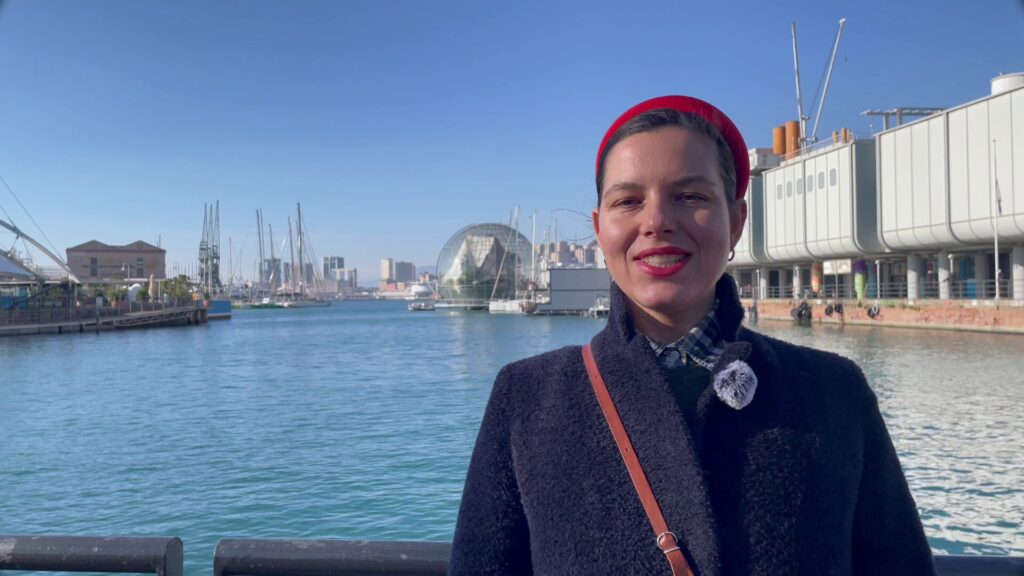
In 2025, we decided to work on a very special theme: Goddesses: much of what we create were focus on exploring the feminine divine in its many forms. In this spirit, we made a project that is available on our website: The Goddess Walk Genoa.
For the first episode, we walked through the historic center of Genoa, searching for statues, images, and icons dedicated to the feminine divine, and we discussed them in a video of just under half an hour. The video aims to show how, even today—after millennia of patriarchy and Christianity— the Goddess and the feminine divine are still present in our daily lives, in this case, within the urban texture of Genoa’s historic center.
We’ll delve into the stories of:
Tiamat, the ancient dragon goddess of the Enuma Elish, the Assyrian-Babylonian creation epic.
Medusa, the Gorgon, and her misunderstood tale.
Athena, her connection to Medusa, and her dual nature.
Aphrodite, her role in mythology, and her enduring presence.
The Virgin Mary and the lesser-known Collyridianism, an early Christian sect that venerated her as a goddess.
All of these divine figures—and many more—can be found within Genoa’s historic heart.
We created this video to show that goddesses have always been a part of our collective past. Their presence remains woven into our everyday lives, even if we don’t always notice it. Recognizing them is not only fascinating but also crucial to understanding the interconnectedness of these myths. Each goddess tells a unique story, yet they are all different expressions of the same sacred essence.
This video is available on our website, along with a downloadable PDF map, so that you, too, can follow along and discover some of the feminine divinities present in the city.
One of the topics we discuss in the video is Collyridianism—a religious movement parallel to Christianity in the 4th century CE, in which women worshiped the Virgin Mary as a deity and offered her small loaves of bread baked in ashes (just as they previously did in offerings to Inanna-Ishtar). Unfortunately, all the sources we have about this movement come from men who strongly opposed it and wrote about it in misogynistic and disrespectful terms.
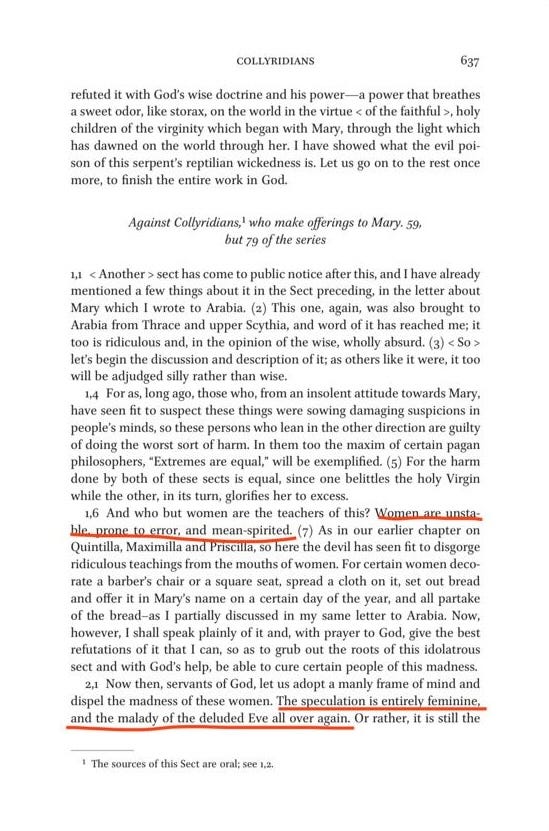
As I mention in the first episode of The Goddess Walk Genoa, one such source is Epiphanius of Salamis, who, in his Panarion, speaks very negatively about these women—and women in general. Below, I have included an excerpt: it almost makes me laugh to read Epiphanius’s terrible words about women, as he sounds like a small child jealous of his more beautiful sibling. But unfortunately, this has long been the way— and, as we know, it still is in many countries and situations—men speak about women. We believe that the issue of feminine divinity is crucial to discuss, and this year, we hope to explore it in depth. It is a fundamental issue for patriarchy and patriarchal way of thinking, which is why rediscovering and remembering feminine divinities is still so important today.
That said, in a strange way, I find myself grateful to Epiphanius of Salamis for mentioning this fascinating movement (albeit in a disgraceful way), as otherwise, it would have been completely lost to history: as women’s history has often been erased, leaving us with only one side of the story—the history of only half the population.
In the video, we discuss the dragon goddess Tiamat, Medusa, Athena, Aphrodite, and, as mentioned, Mary and Collyridianism.